

Introducing Character Cards!
Good plots are driven by characters and the decisions they make.
I wanted to make sure we not forget that.. myself included!
Good characters drive story
I go on about ‘plotting before writing’, but while we all flesh out characters in our own way, some writers like to do it on the board.
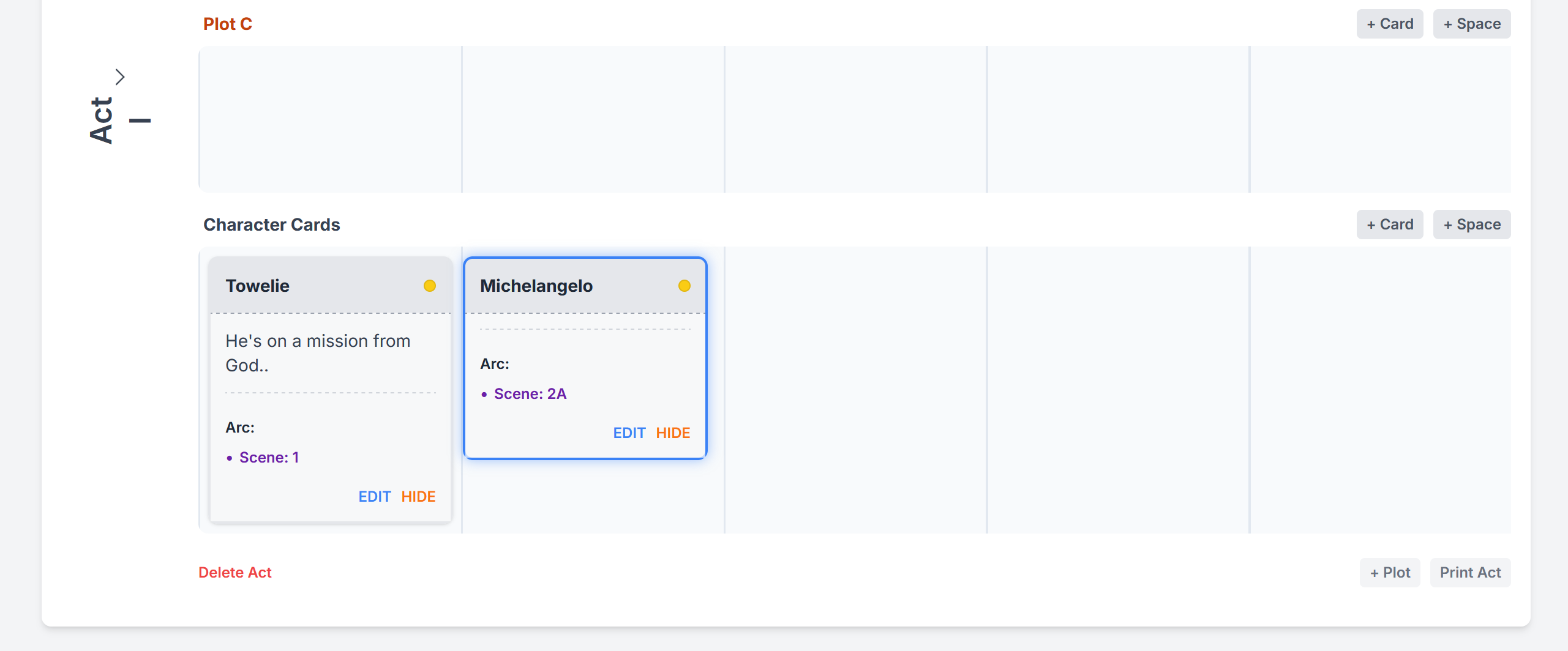
Character Cards can be found under your plot timelines and can be placed anywhere on your boards depending on how you like to work.
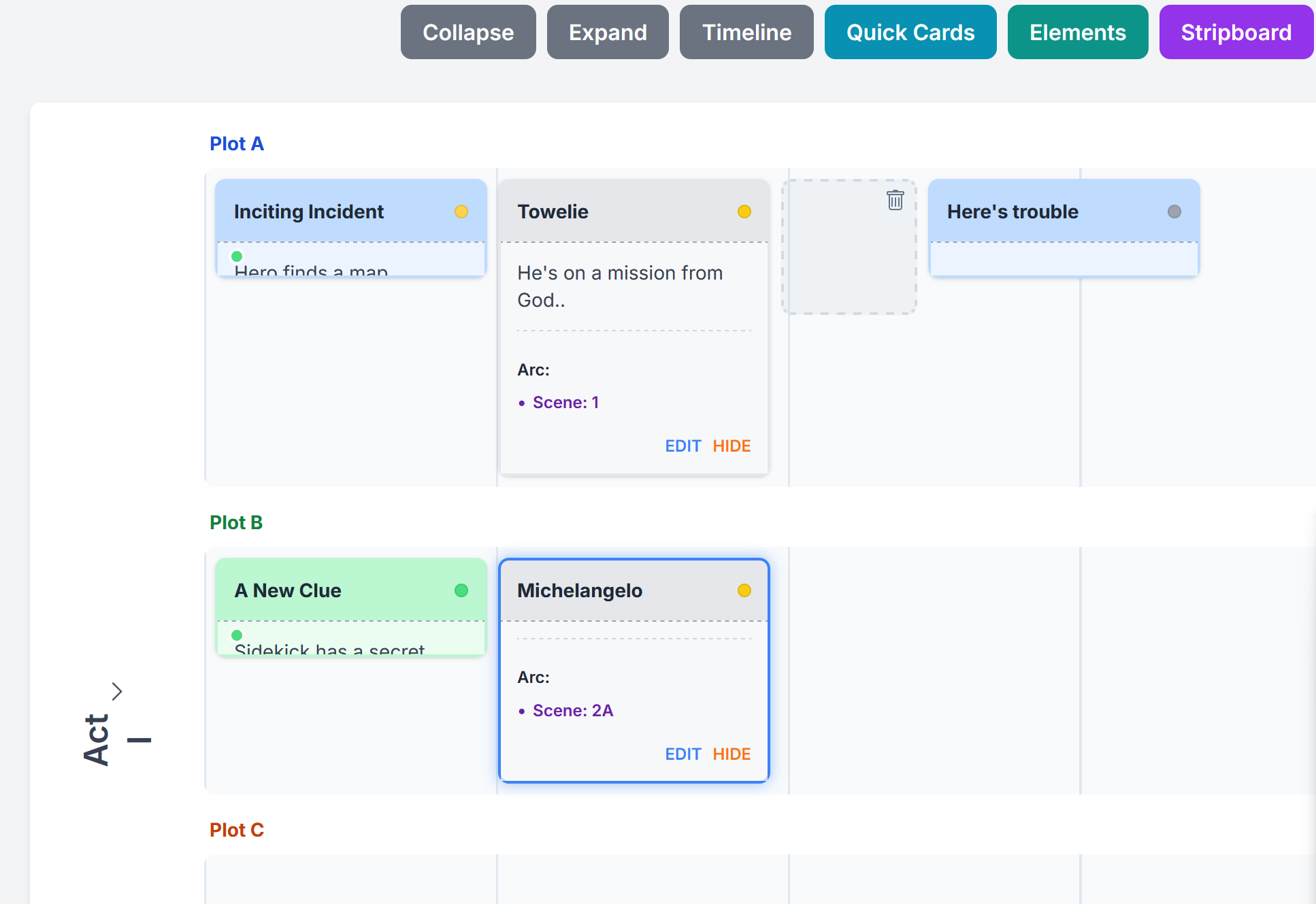
Perhaps you like to keep them down the bottom for reference - or perhaps you like to keep them where you can see them while you’re crafting? It’s up to you.
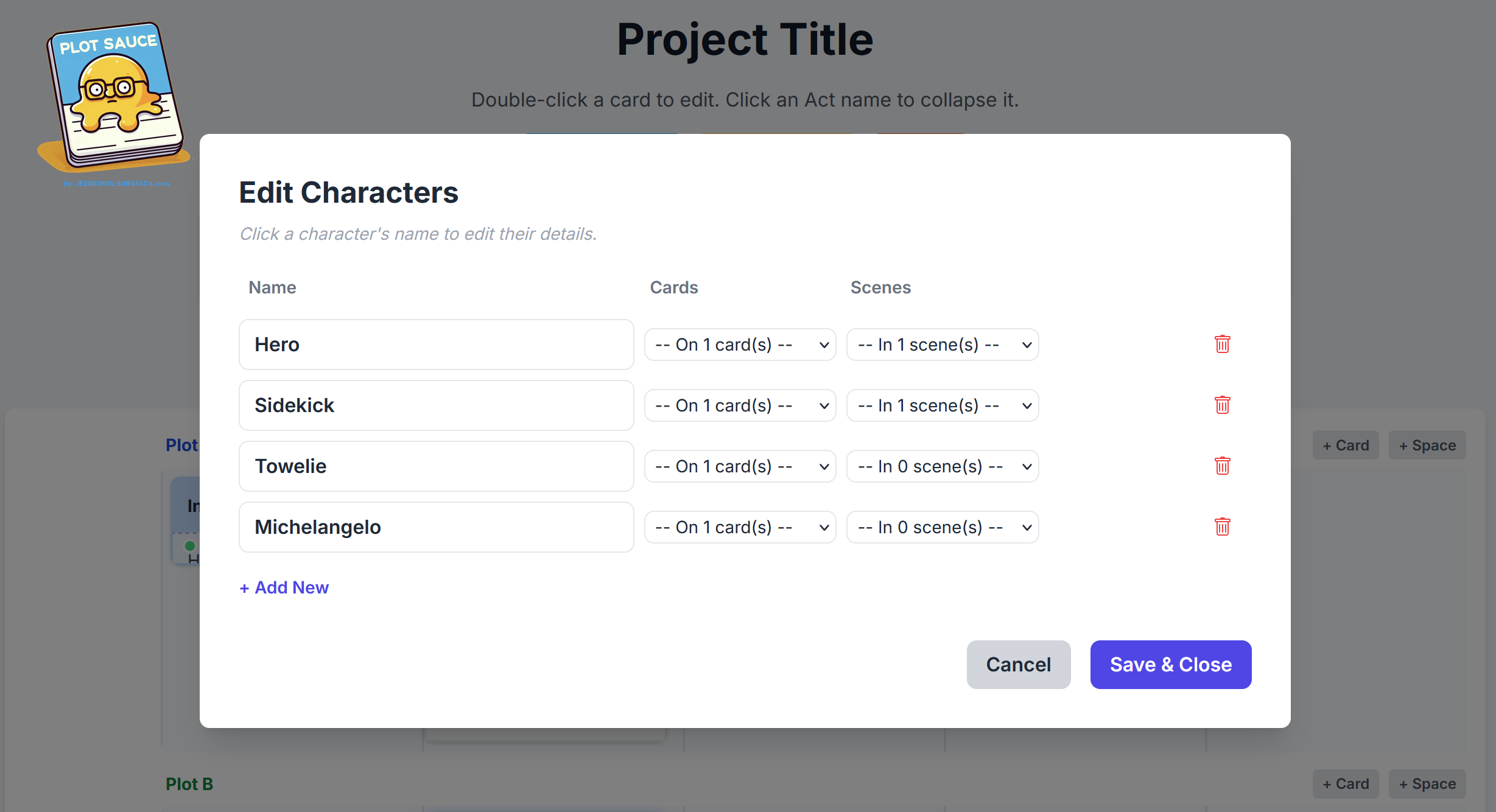
You can add a card on the timeline or by adding a character in the Character Editor.
Have I told you to SAVE today? Seriously, ‘save your work’, I can’t rescue something you refresh or delete. Your data is your business.
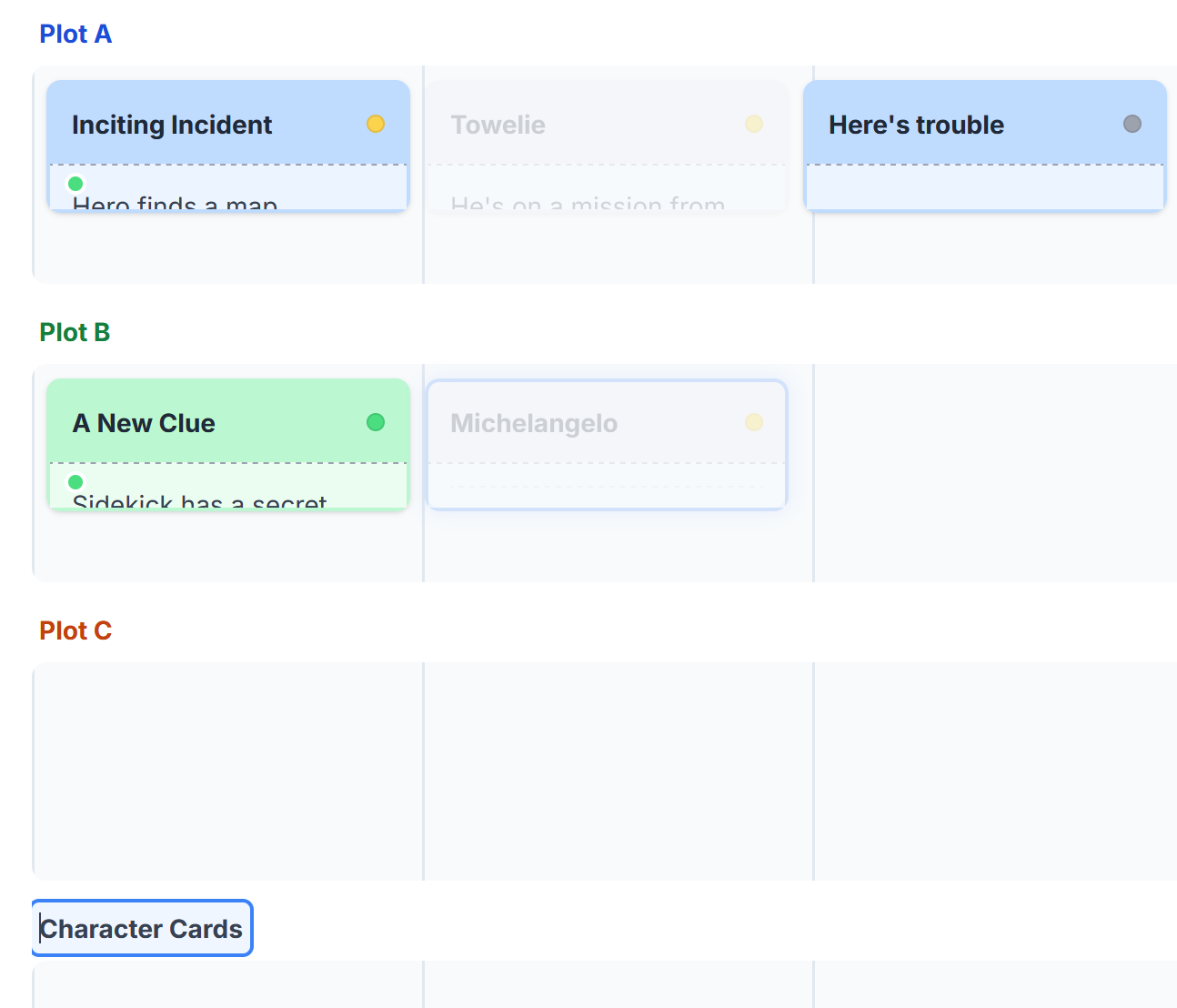
If you want them out of view, you can hit the Character Cards timeline header which will shrink and dissolve them, or hit HIDE for one at a time.
Safety first - you can only ‘delete’ a character and their card in the Character Editor.
The key thing is you populate the Character Cards.
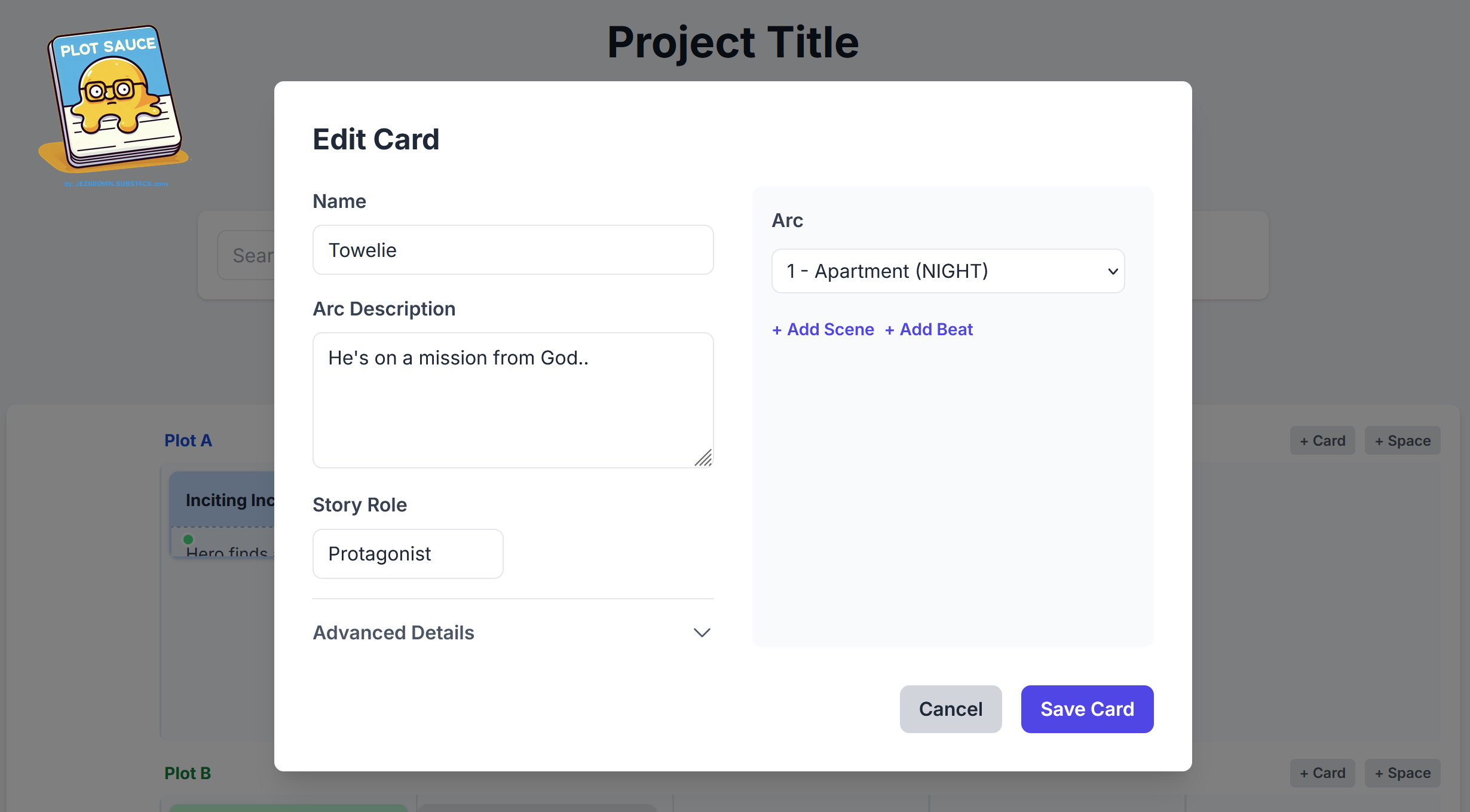
Take the time to fill in details about your characters, because it will effect the choices they make and improve your story.
There should be a reason why anyone does anything.
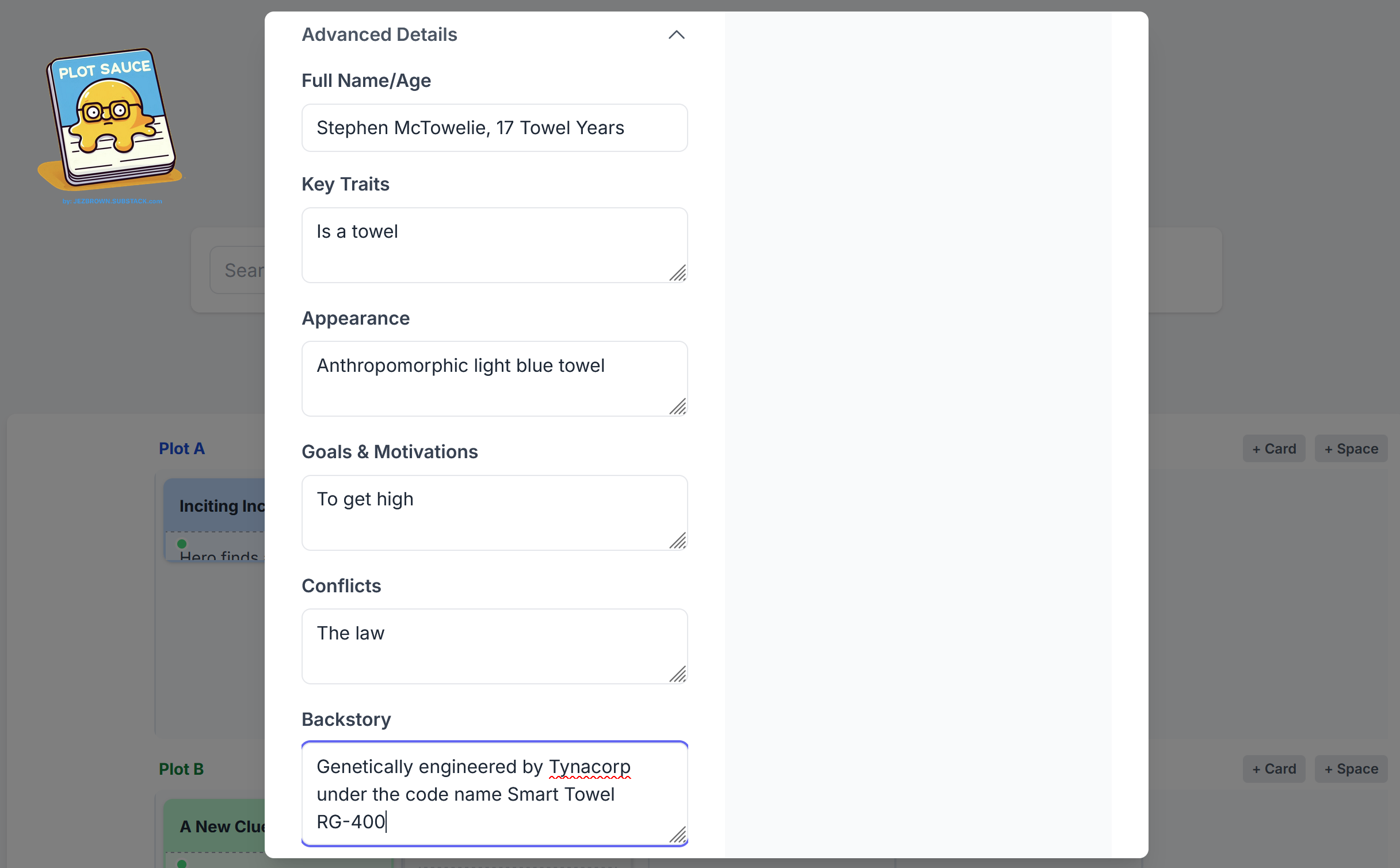
You can add a lot of information under advanced details, figure out your character’s role in your story to help define the dynamic - you can always change it.
You can also keep a record of your character’s arc by beating it out around their scenes. Think of it as their story within the whole story.
It’s another way to catch unresolved plot points or use it to focus on a characters emotions while the plot cards focus on the action.
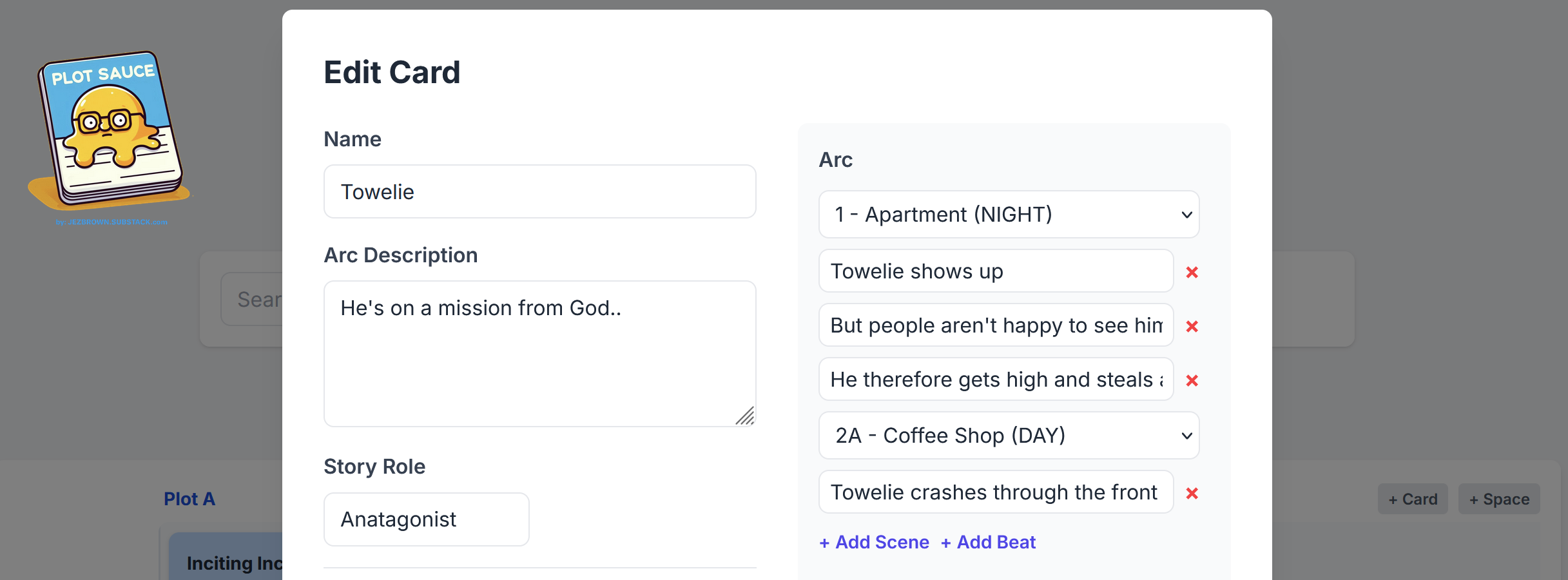
These arc scenes won’t tally against a character in the Elements Edit Menus. Only once your character is added to plot cards will it show the scenes you’ve actually put them in.
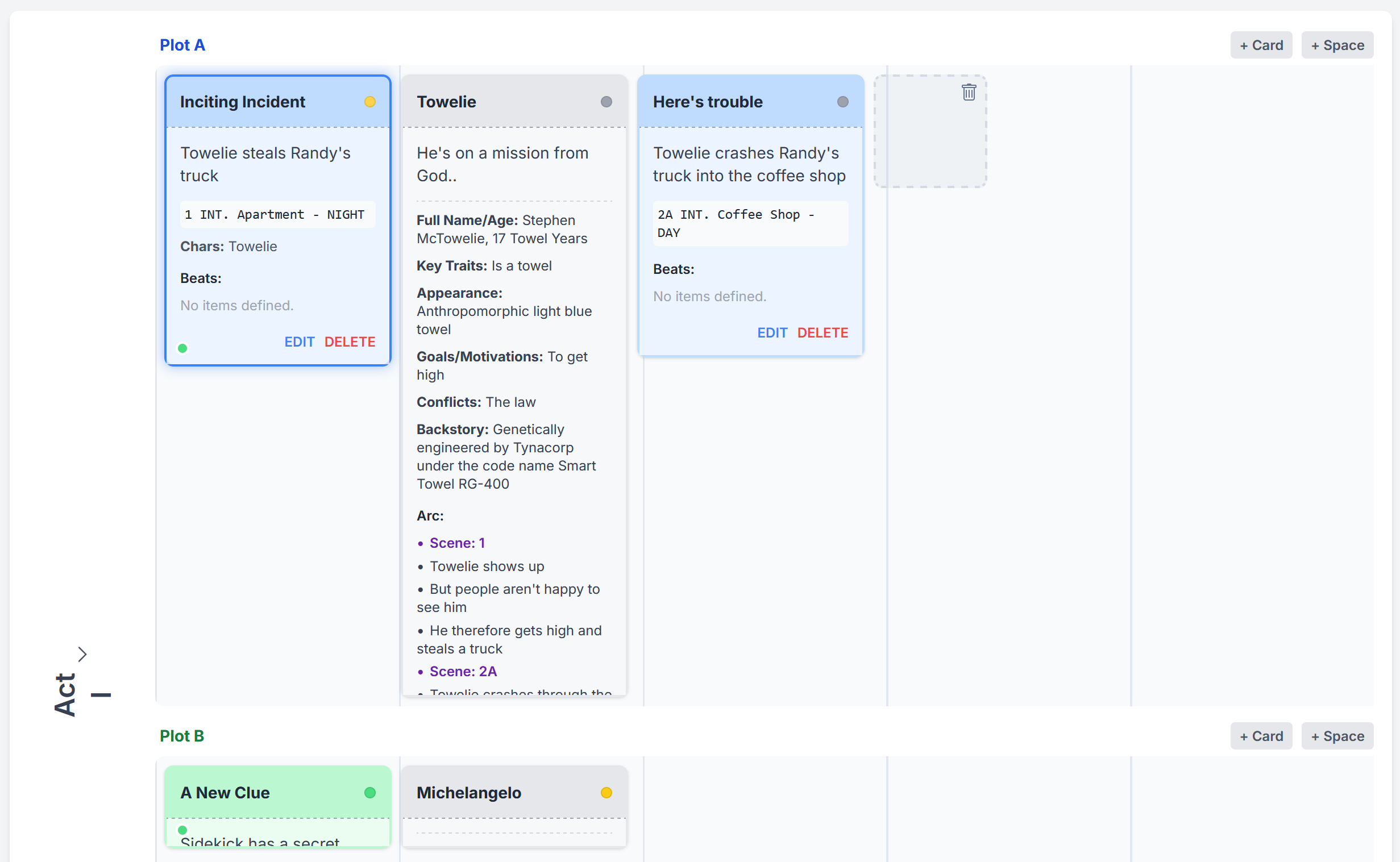
You can expand your Character Card at any time for quick reference.
Character Cards are another way to think about plotting.
What are your characters doing internally/externally?
Why would they make that choice?
What are their goals?
What is their conflict?
THEN..
What is the goal of the scene?
What has changed?
A character’s decisions should drive every ‘BUT’ and ‘THEREFORE’.. and you should never settle for.. ‘AND’.
Consider subscribing to this Substack to support my work. It’s only £20 for a year
(or *$25US, *$45NZ *at the time of writing) and buys me the time to work on software, write bad sitcoms and make award winning podcasts (which don’t make any money).
Now with more updates!